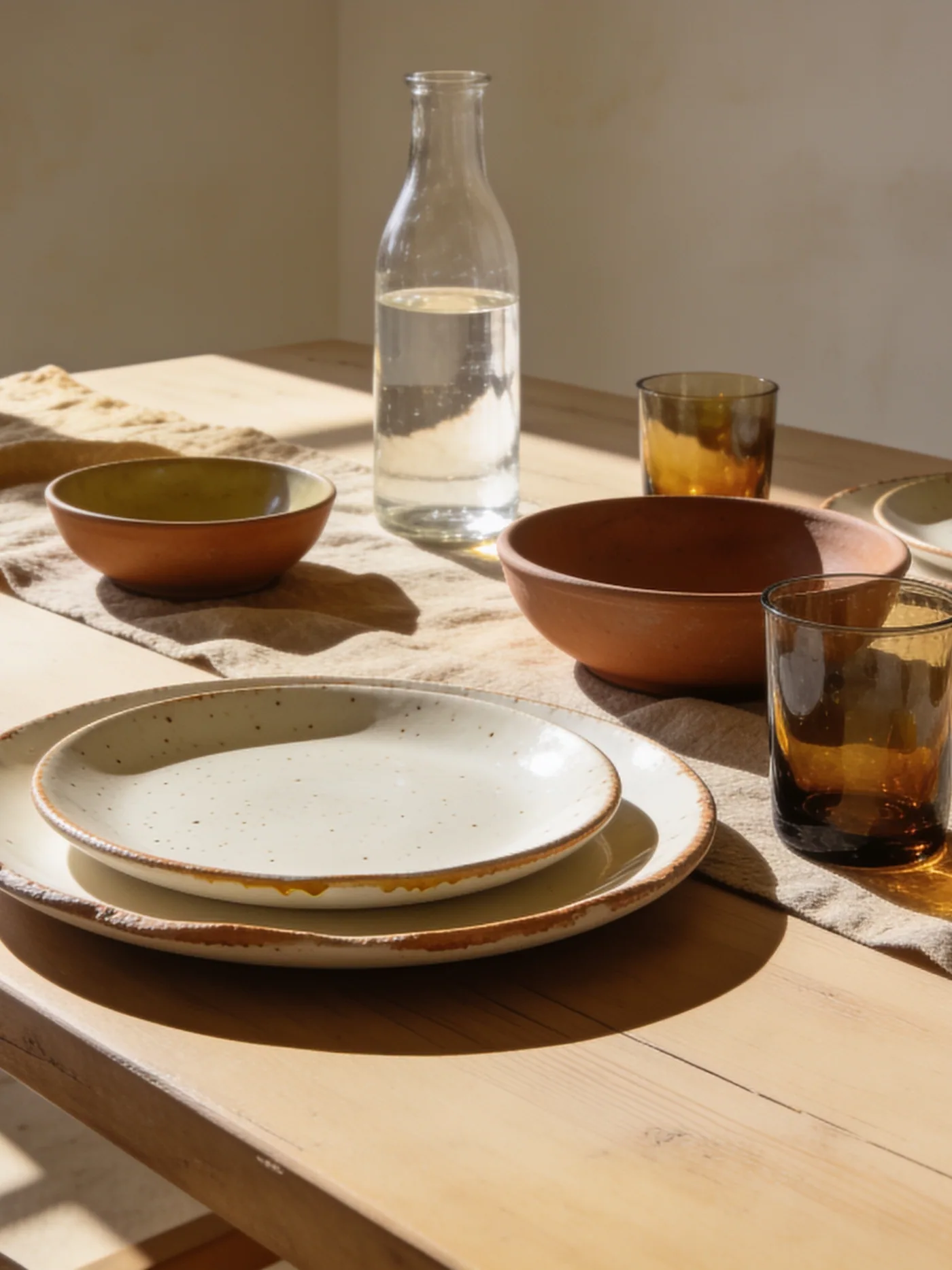
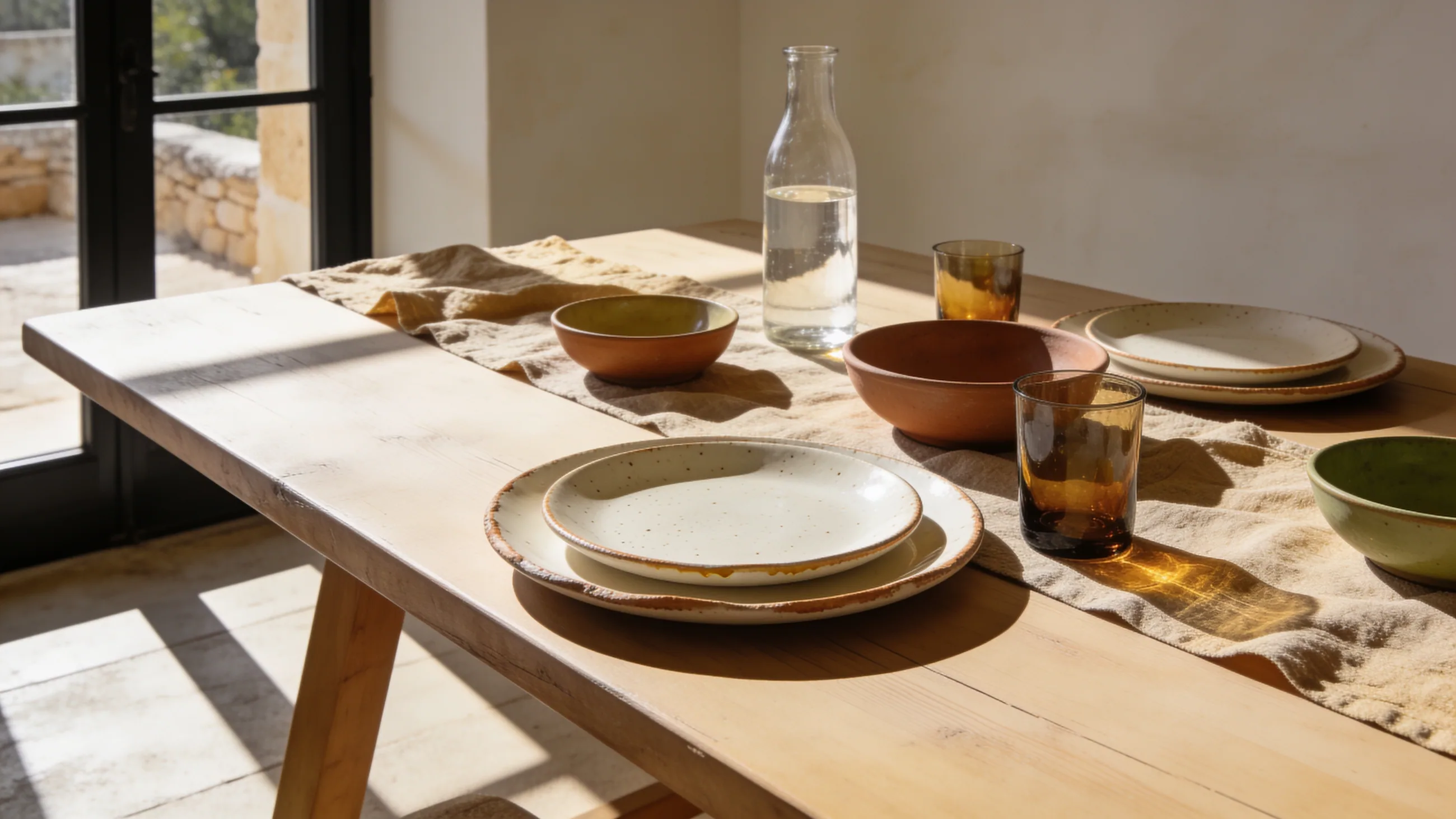
Tableware made by hand
The whole object, stated.
Every piece publishes its complete material record — what the body is made of, the temperature it was fired to, its exact dimensions and weight, how to look after it, and what will damage it. Including where your piece will differ from the photograph.
Free shipping over $95 · Ships in 3–6 business days · All prices in USD
Made by hand
Thrown, blown and hemmed individually. Every page states where pieces differ.
The full record
Body, firing temperature, exact dimensions, weight and care — on every product.
Packed for breakage
Two inches of clearance to every wall of the box. Anything broken is replaced free.
30-day returns
Unused and in original packaging, on a prepaid label. No restocking fee.
Where most tables start
A place to start
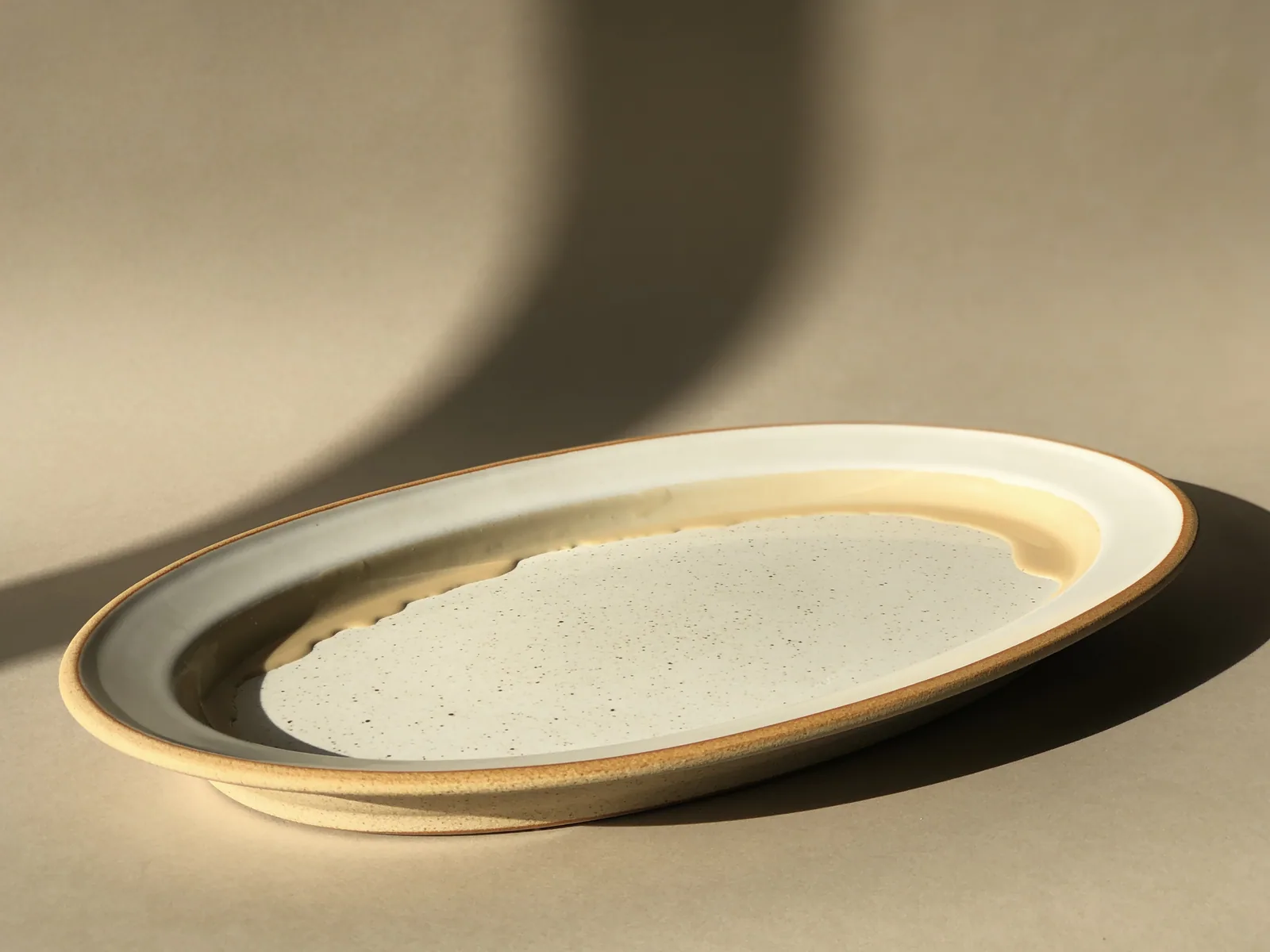
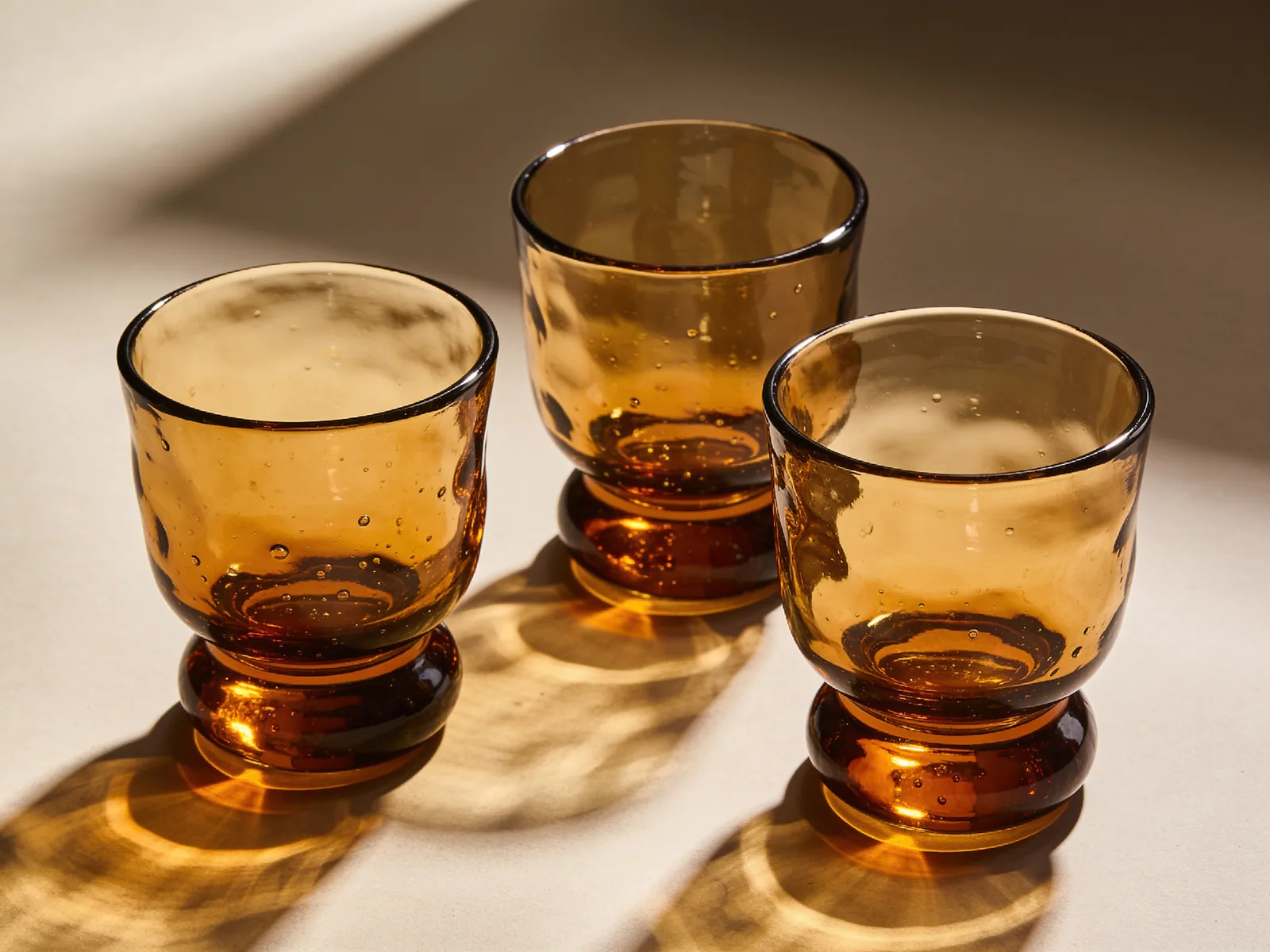
The material record
Three things every product page tells you.
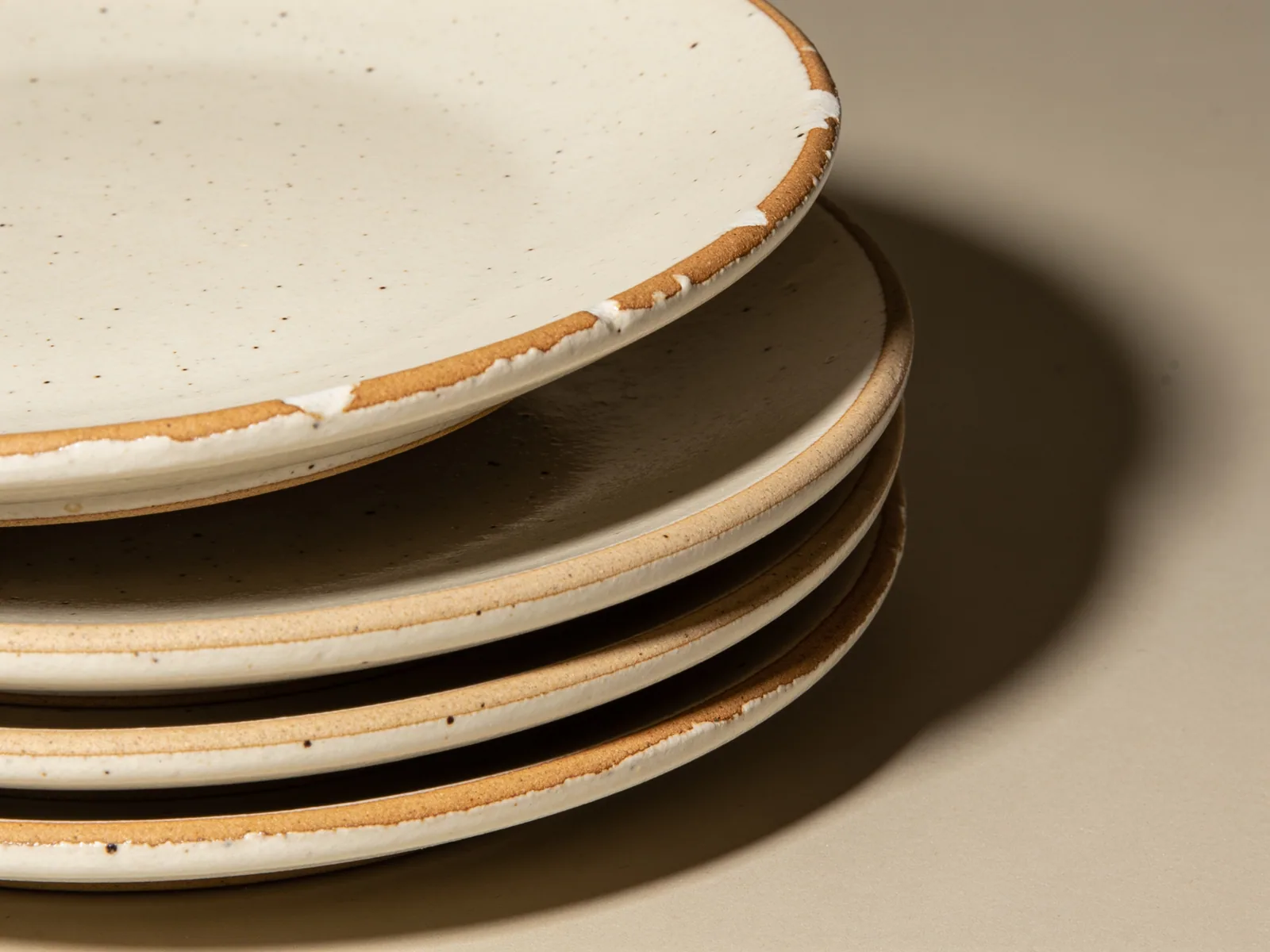
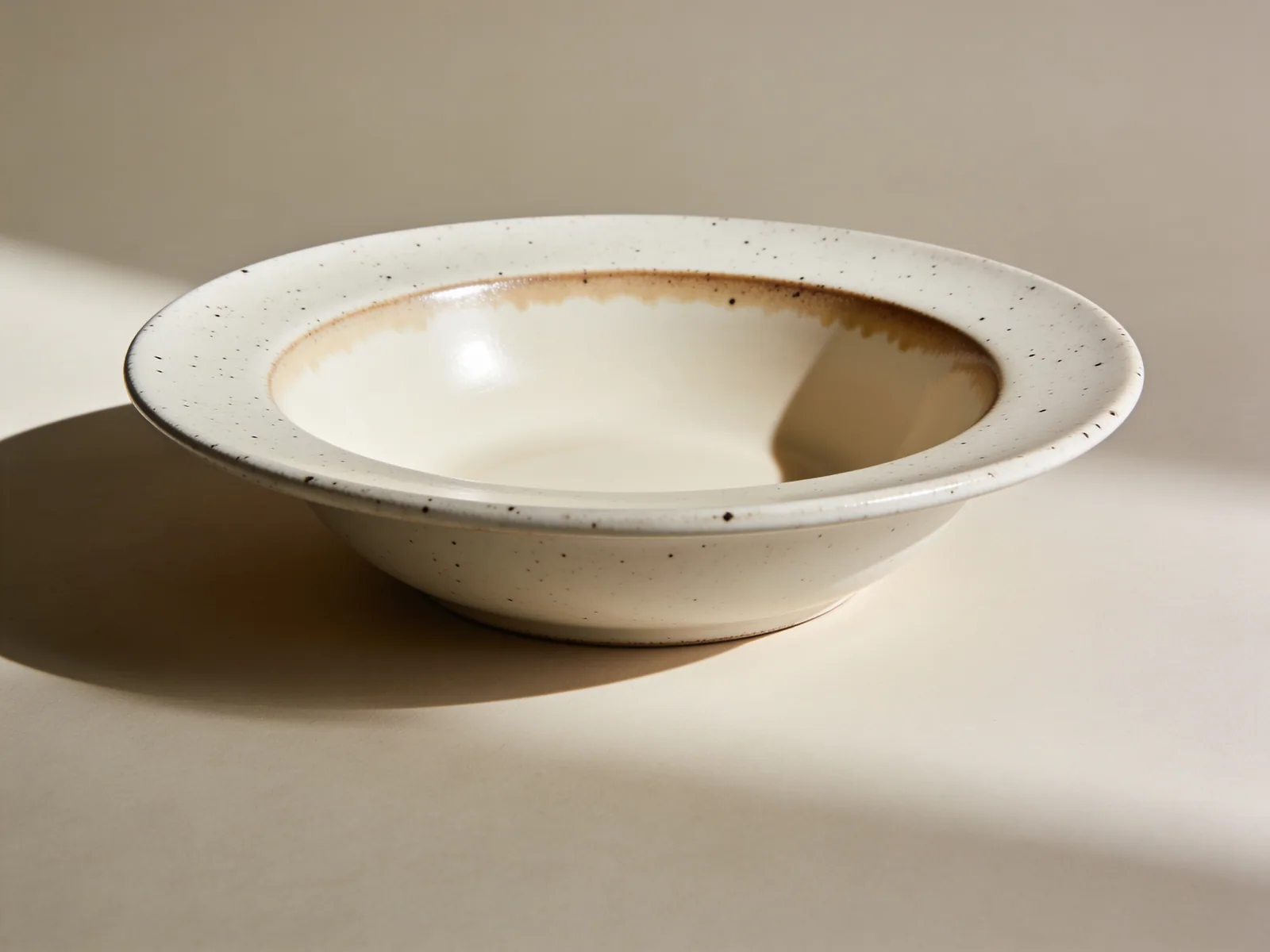
Most shops tell you a plate is beautiful. We would rather tell you it is 27 centimetres across, weighs 620 grams, was fired to 1240°C, and that the speckle on yours will not match the photograph. You can decide about beautiful yourself.
Read the materials- What it is made of
- The clay or glass body, the glaze, and the temperature it was fired to. Firing temperature is not trivia — it decides whether a piece survives a decade of dishwashers.
- Exactly how big, exactly how heavy
- Diameter, height, capacity and weight in real units. Enough to know whether it fits your cupboard and whether you will enjoy holding it.
- Where yours will differ
- The line most shops leave out. Speckle, rim regularity, glaze pooling, wall thickness — stated before you buy, so what arrives is what you expected.
6 categories, 18 pieces
By category
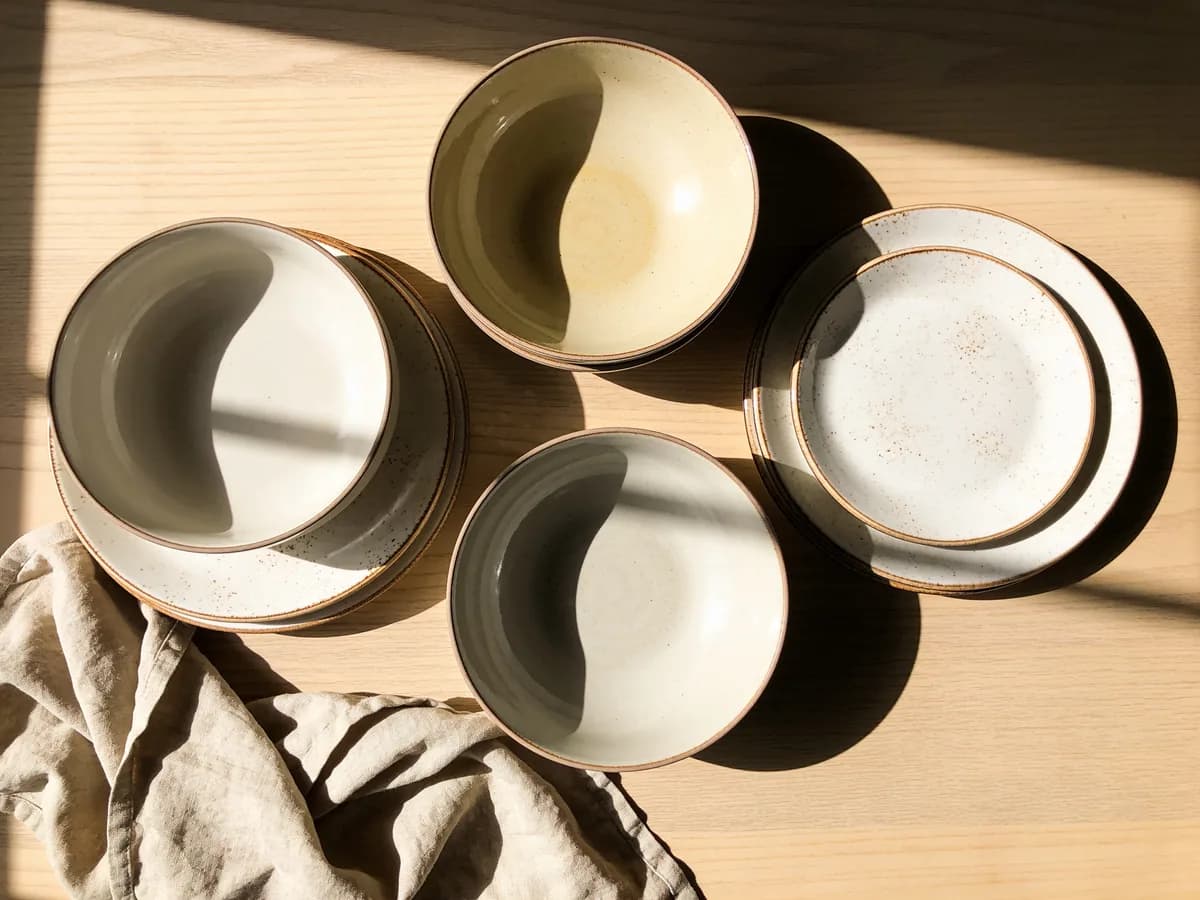
Plates & Bowls
Hand-thrown stoneware for everyday use. Fired to 1240°C, food-safe, dishwasher-safe, and heavy enough in the hand to feel like something.
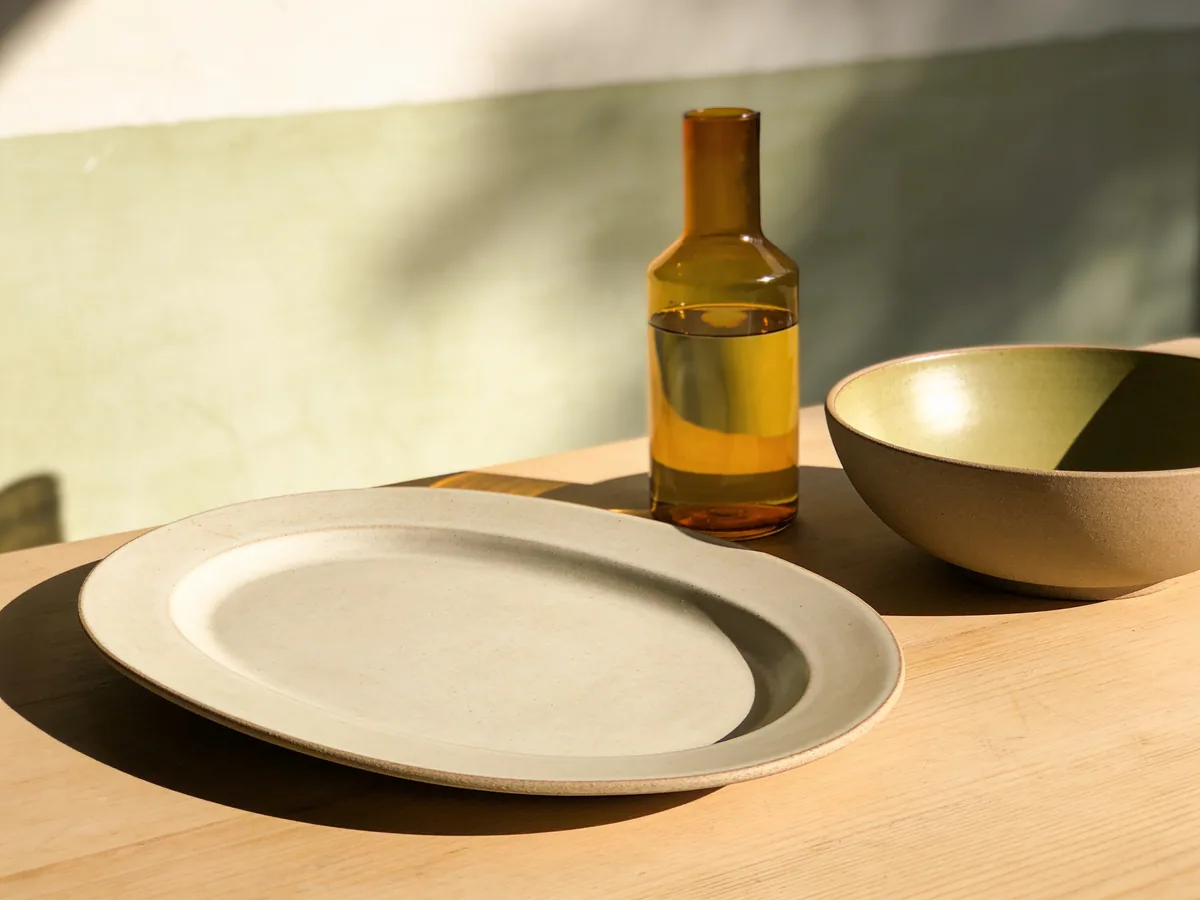
Serving & Table
Platters, serving bowls and carafes sized for a table of four to six. The pieces that come out once the plates are already down.
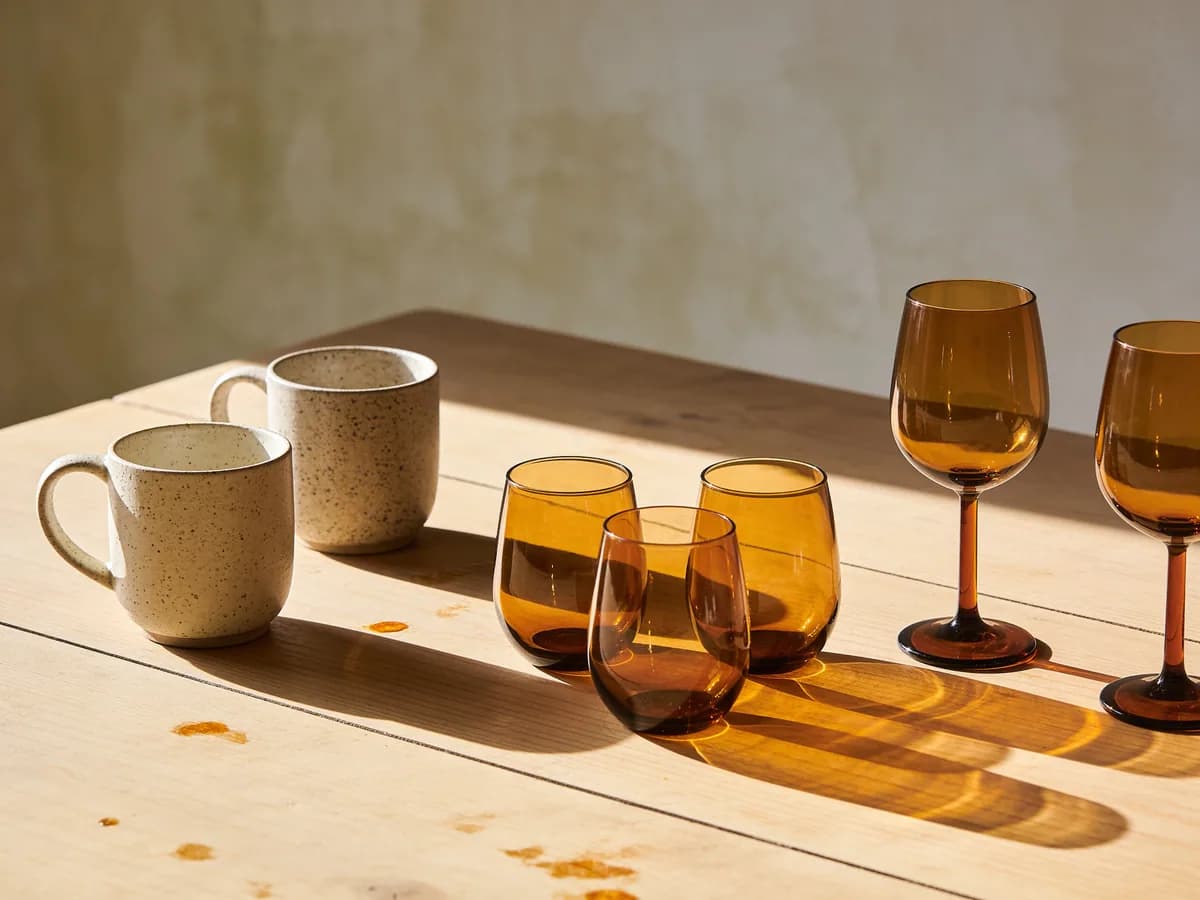
Glasses & Mugs
Hand-blown glass and thrown stoneware. Slight variation in wall thickness and height is inherent to both, and is stated on every page.
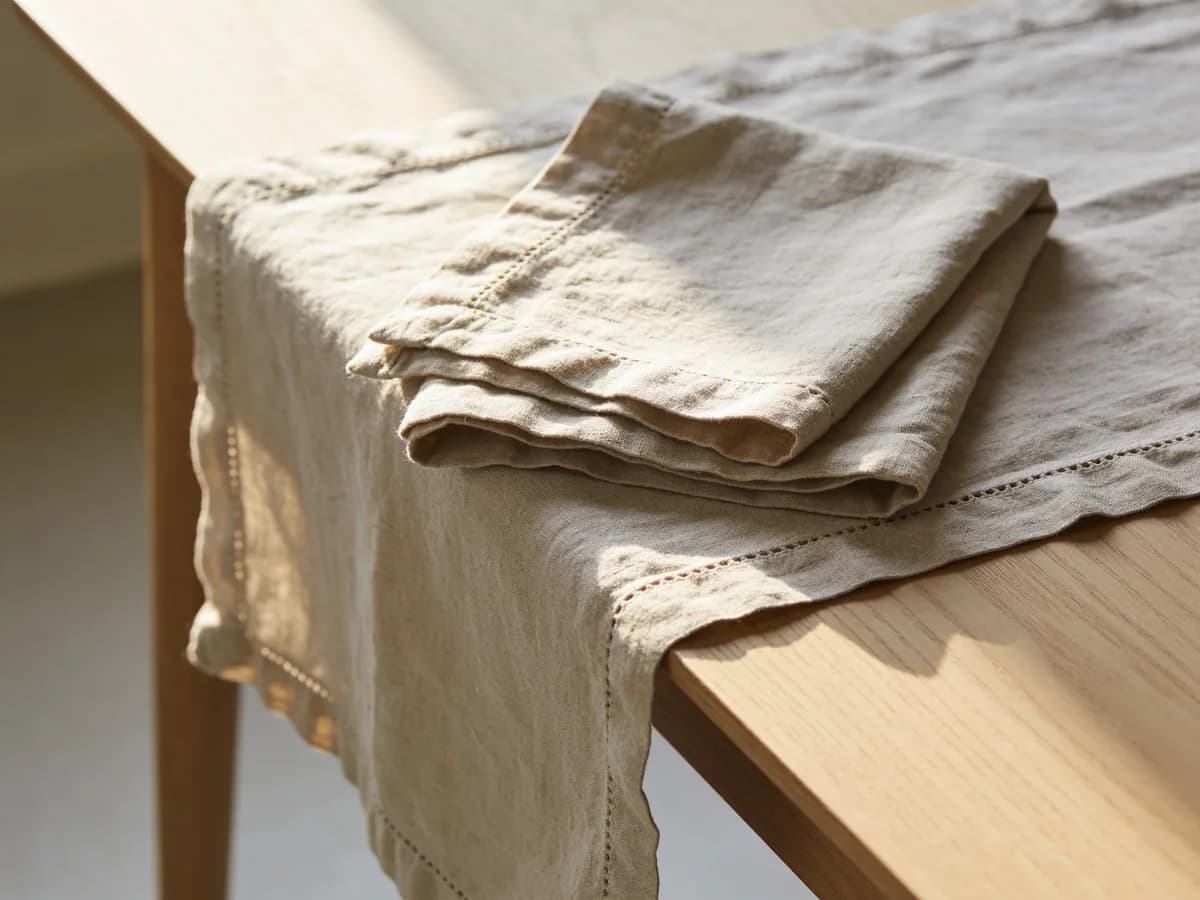
Napkins & Linen
Stonewashed European flax, cut and hemmed to size. Softens with every wash and takes a wrinkle rather than fighting it.
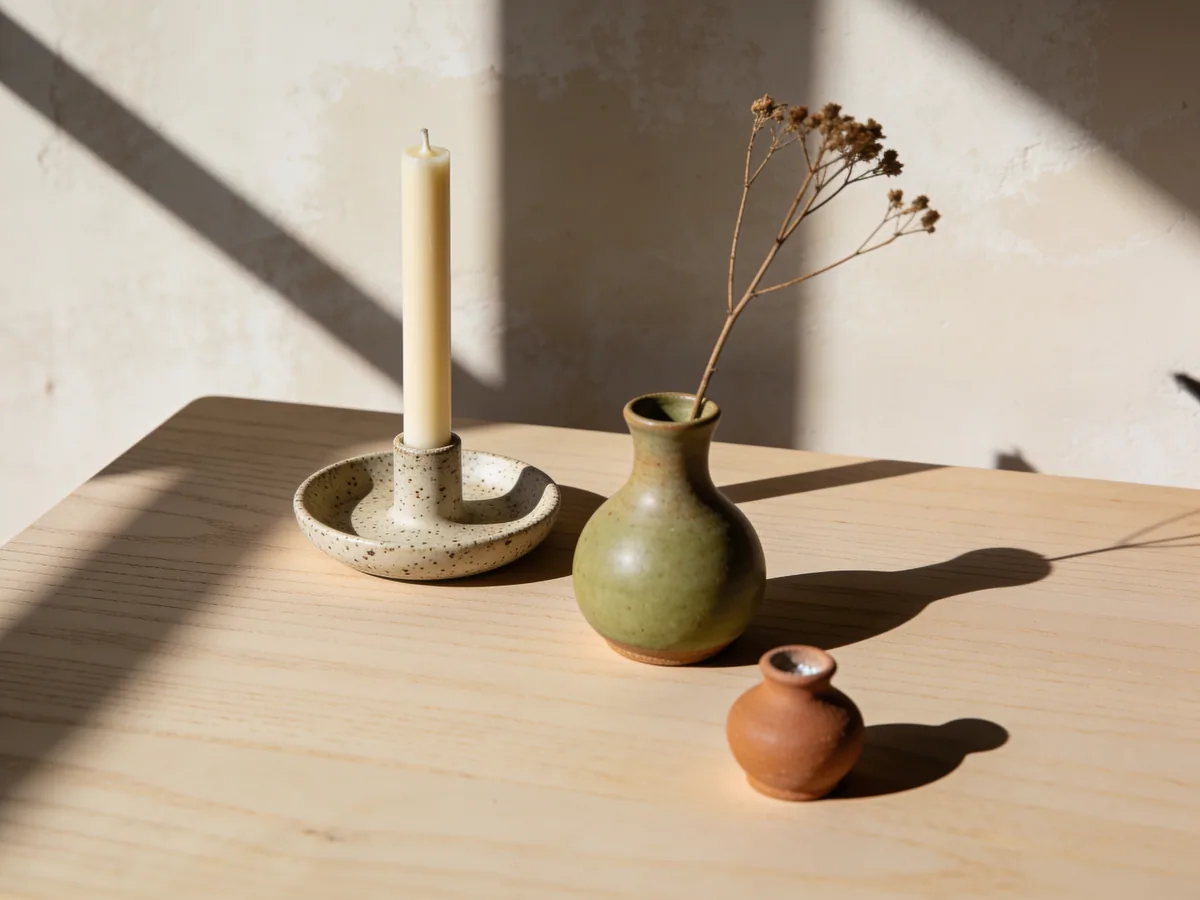
Small Objects
Candle holders, salt cellars, bud vases. The things that stay on the table between meals.
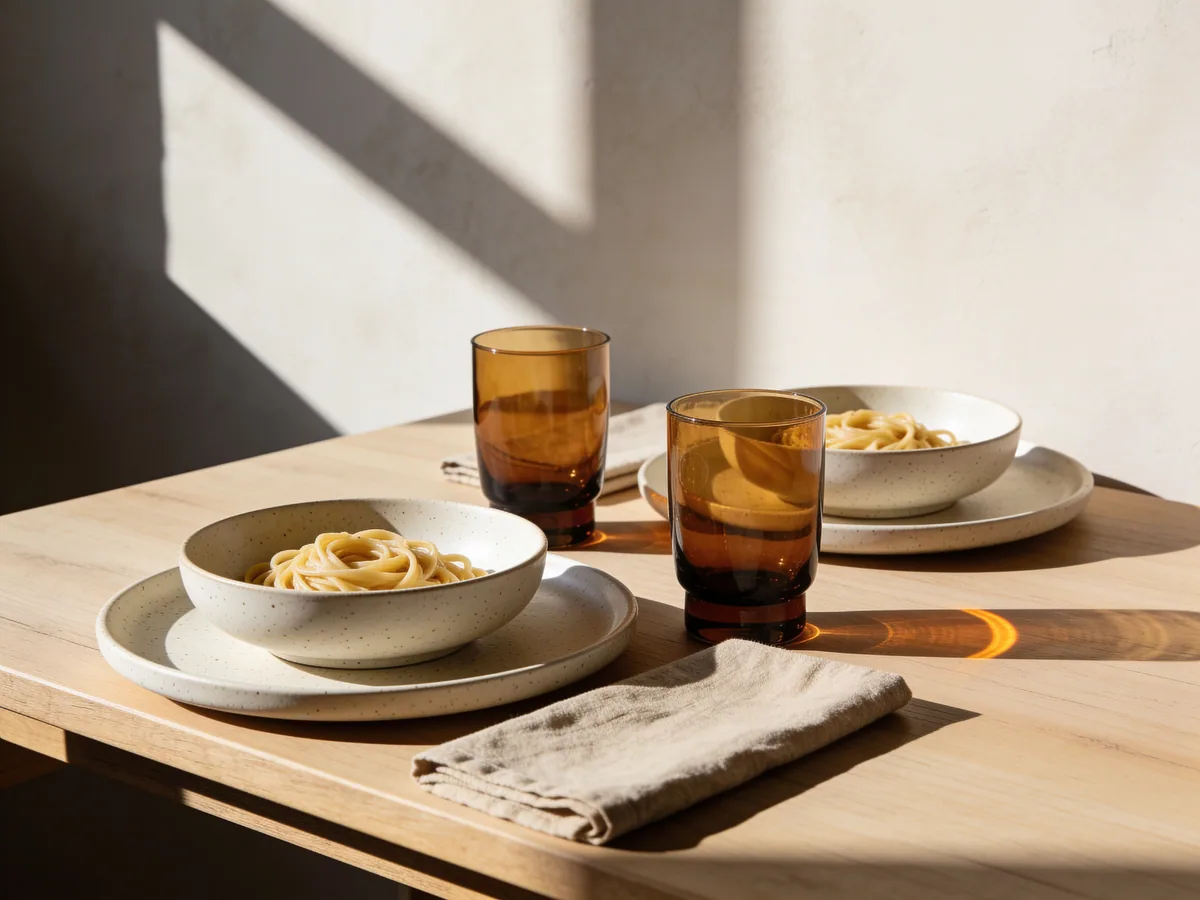
Sets
Complete settings, priced below the sum of their parts. Every set lists exactly what is inside it and what each piece costs separately.
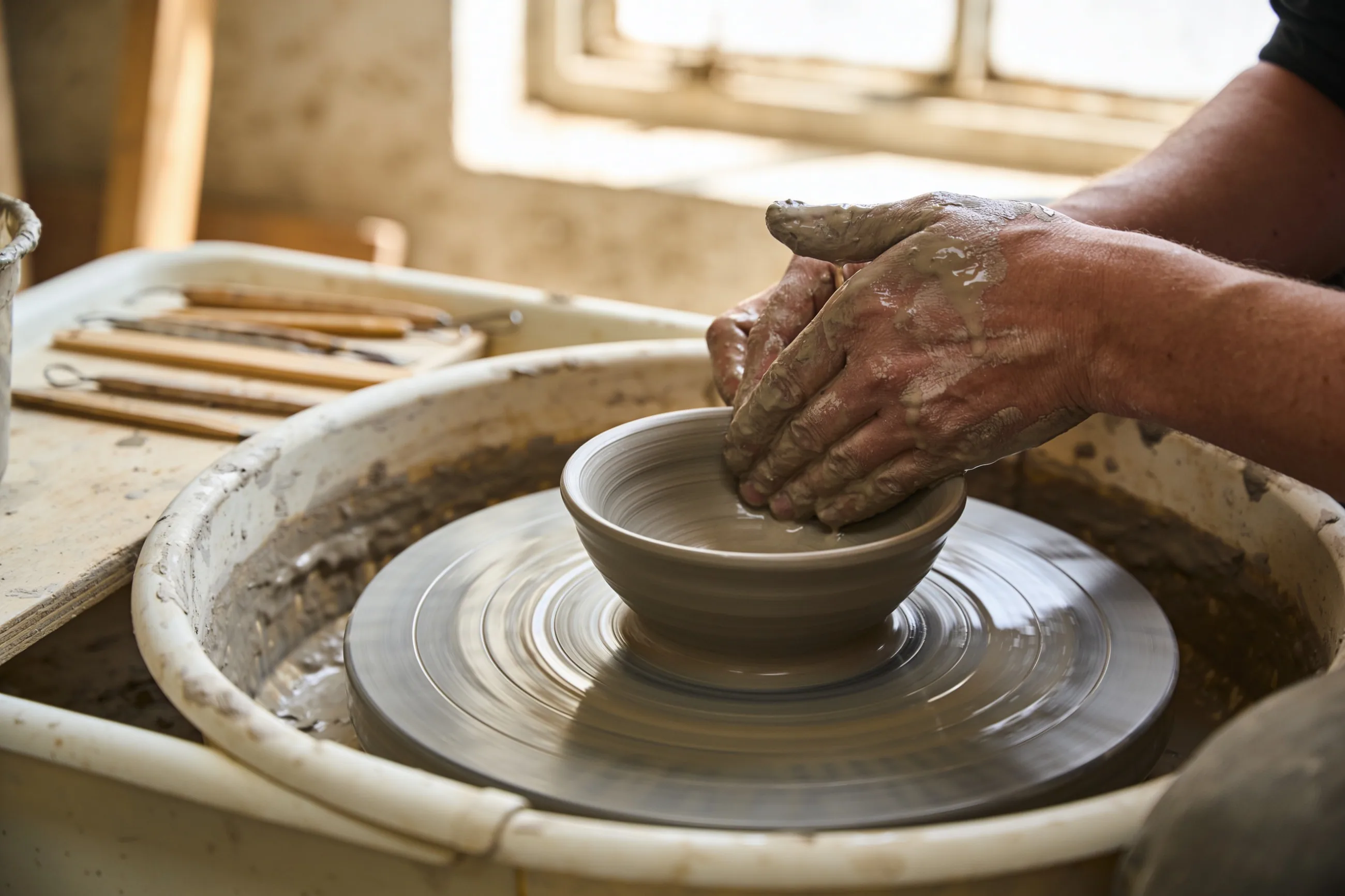
How a piece is made
Four stages, and each one leaves a mark.
Everything that makes one piece different from the next happens in these four steps. Knowing what they are is the difference between receiving a hand-made object and receiving one you think is flawed.
- 1
Thrown
On the wheel, one at a time, from a buff stoneware clay flecked with iron. The wall thickens towards the foot because a hand does that and a mould does not.
- 2
Bisque
A first firing to around 1000°C, which drives off the last of the water and turns soft clay into something that can be handled and glazed.
- 3
Glazed
Dipped by hand and wiped clear at the foot. How long a piece sits in the glaze decides how thickly it coats, which is why no two break the same way over a rim.
- 4
Fired
To 1240°C, at which the body vitrifies and stops being porous. That is the step that makes a plate genuinely dishwasher-safe rather than dishwasher-tolerant.
6 materials
We work in a short list of materials.
Six materials, chosen because each does something the others cannot. Stoneware takes heat, porcelain takes a thin wall, blown glass takes light, linen takes a crease. Nothing here is a substitute pretending to be something else.
How each one behavesSpeckled Stoneware
A buff clay body flecked with iron, which bursts into dark speckle in the firing. No two pieces speckle identically. Fired to 1240°C, vitrified, food-safe and dishwasher-safe.
Porcelain
A whiter, denser body fired to 1280°C. Thinner walls and a cooler, harder surface than stoneware, with a faint translucency at the rim.
Hand-Blown Glass
Free-blown soda-lime glass. Wall thickness, height and the number of trapped bubbles vary piece to piece — that variation is the evidence it was blown rather than pressed.
Stonewashed Linen
European flax, woven and then stonewashed so it arrives already soft. It creases readily, and is meant to. Grows softer and paler with washing.
Olive Wood
Dense, close-grained wood with a strong figure that differs in every board. Finished with food-safe oil, never lacquered. Wants oiling, never a dishwasher.
Unglazed Terracotta
Low-fired red earthenware, left unglazed outside so it stays porous and cool to the touch. Glazed inside, where it meets food.
30-day returns
Unused and in original packaging, on a prepaid label we send you. Refunded within 5 business days of reaching us.
Free shipping over $95
Standard delivery in 3–6 business days. Tracking on every order.
Arrived broken
Send a photograph within 14 days. Replaced or refunded in full including shipping — and nothing to post back.